Pennsylvania Consumer Confidence Reports: A Reader’s Guide
A Consumer Confidence Report can be reassuring, confusing or both. Pennsylvania’s reports describe water from a public supplier, but they do not automatically show what comes out of a particular faucet. This guide explains how to find the right report, read its results without overinterpreting them, and decide when a report points to a useful follow-up.
What a Pennsylvania Consumer Confidence Report can tell you
A Consumer Confidence Report, often shortened to CCR, is a water-quality report from a community water system. It is meant to help customers understand information about the system’s drinking water. The report can give you a useful overview, but it is not a laboratory result from your kitchen tap and it cannot answer every question about a home’s plumbing.
Think of a CCR as a view of the supplier’s system rather than a complete description of each building it serves. Its findings can help you understand what the supplier reports about its water, identify topics to ask about, and find out whether the report describes a concern or a violation. The actual information and layout can vary between suppliers, so start with the report’s own headings and explanations.
The Pennsylvania Department of Environmental Protection says community water systems must mail or otherwise deliver a copy of a water quality report to each customer. If you did not receive one, that does not necessarily mean a report does not exist. It may be available from the supplier, and you can ask the supplier for a copy.
A CCR is also different from an individual water test. The report summarizes water-quality information for the system. A test collected at a home’s faucet can instead provide information about that particular sample and location. Those documents answer different questions, and neither should be treated as a substitute for the other in every situation.
A report is most useful when you know:
- Which water supplier serves the address you care about.
- What period the report covers.
- What the report says about its results, standards and any reported violations.
- Whether the question concerns the supplier’s water or plumbing inside a particular home.
- Where to ask for clarification or more specific information.
For background on how public water-quality results are produced and reported, see How Pennsylvania Tap Water Quality Is Tested and Reported. If you are trying to locate the report itself, How to Find the Water Quality Report for Your Pennsylvania Address walks through that task in more detail.
The report does not have to settle every concern to be useful. It can show you what the supplier is reporting and help you make a more focused follow-up request. It is also reasonable to treat the report as one piece of evidence rather than as a guarantee about every tap, every building or every moment.
Find the report for the supplier that serves your address
The first challenge is often identifying the right supplier. A town name, mailing address or county does not always tell you which system provides water to a specific property. Service areas can have boundaries that do not match the boundaries people use for local government or postal addresses. A neighboring property may receive water from a different supplier.
Start with the water bill, if you have one. The bill usually identifies the company, authority or other supplier responsible for the account. If you do not have a bill, check the utility’s official address or service-area lookup, when available. This is particularly useful when you are moving, renting, buying a home or checking on an address that is not your own.
If the supplier is still unclear, Pennsylvania DEP’s Drinking Water Reporting System can help confirm the public water system. Once you know the supplier, go to its official Consumer Confidence Report page or request the report from the supplier. Pennsylvania DEP’s CCR page also links reports for selected systems, which can be a useful starting point.
| What you have | What to check | Why it helps |
|---|---|---|
| A water bill | Supplier name and account information | It can identify the supplier connected to the service. |
| An address but no bill | The utility’s official address or service-area lookup | It can show whether the address falls within that supplier’s service area. |
| A supplier name that may be uncertain | Pennsylvania DEP’s Drinking Water Reporting System | It can help confirm which public water system you need to investigate. |
| A confirmed supplier | Its CCR page, or a report requested from the supplier | It gets you to the report tied to the system serving the address. |
| A report found through a search | The supplier, service area and report period shown in the document | It helps prevent relying on a report for a similarly named system or a different area. |
The Pennsylvania Department of Environmental Protection says suppliers that post a Consumer Confidence Report online must provide a direct URL to their customers. In practice, look for a link that opens the report itself rather than stopping at a general homepage. If a search result takes you to a broad utility page, continue to the supplier’s report page or ask the supplier for the direct report link.
Community water systems serving 100,000 or more people must post the current year’s report on a publicly accessible internet site, according to the Pennsylvania Department of Environmental Protection. That requirement does not mean every customer will find the report immediately through a search engine, or that a report for a smaller supplier will be presented in the same way. If you cannot find it, ask the supplier directly.
A report is only useful for your question if it is the right report. Check that the supplier name matches, that the system serves the address you have in mind, and that the report identifies the period it covers. Similar names are easy to confuse, especially when nearby communities have separate suppliers or when a system’s name does not match the local place name people commonly use.
If you live in an apartment or rent a home, you may not receive a water bill directly. Ask the landlord or property manager which supplier serves the building, then check with that supplier. For more on locating the supplier when the billing arrangement is less direct, see Who Supplies Water to Your Pennsylvania Address? How to Check and How Pennsylvania Renters Can Get the Water Report a Landlord Receives.
If the report is not online, or a link is broken, a direct request can be more efficient than continuing to search. Contact the supplier through its official website and ask for the current report and the period it covers. Keep the address or account information available so the supplier can confirm that you are asking about the right service area.
Read the report in a deliberate order
CCR layouts differ, so there is no single page or heading that will look identical in every report. Rather than reading every line at once, begin by orienting yourself. Confirm the supplier and report period, then look for the summary, the tables of results, any explanations of terms, and any discussion of violations or follow-up actions.
A useful reading sequence is:
- Confirm the system and period. Make sure you are looking at the report for the supplier that serves your address. Note the period the document says it covers.
- Read the summary and explanations. These sections may explain the supplier’s main messages, how to interpret the report, and how customers can ask questions.
- Review the results table. Pay attention to the name of each listed item, the reported result, the units, and any comparison value or standard shown beside it.
- Check the report’s own interpretation. Look for whether the supplier describes a result as meeting a standard, exceeding a limit, or involving a violation. Do not infer that status from a result alone when the report provides its own explanation.
- Read notes and footnotes. A table may use abbreviations, report a range, or explain how the listed value should be understood. Notes can change how a row should be read.
- Look for the contact information and next steps. If a result is unclear, ask the supplier to explain the particular row rather than guessing what the shorthand means.
The table deserves a careful read. A contaminant name by itself does not tell you how much was reported, what comparison applies, or whether the supplier says a regulatory requirement was met. A result needs context: the units, the applicable comparison value shown in the report, the report’s explanation, and any notes describing how the data should be read.
Do not compare numbers until you know that they use the same units and represent the same kind of measurement. Two values can look directly comparable while referring to different units or reporting conventions. If you are unsure, find the report’s definitions or ask the supplier to clarify the unit and comparison value for that specific line.
A blank, dash or abbreviation is not self-explanatory. It might be used differently across reports, so do not assume it means “zero,” “not present” or “safe.” Check the report’s legend and notes. If the meaning remains uncertain, ask the supplier what that entry means in that report.
The Pennsylvania Department of Environmental Protection says Detection and Violation Data help Pennsylvania community water systems prepare their annual Consumer Confidence Reports. That wording is a reminder that the report is prepared from system information, not a direct sample of every customer’s faucet. It is still important to read the supplier’s explanation of what its reported results represent.
For a closer explanation of terms and entries, see How to Read Units, Limits and Violations on a Pennsylvania CCR. If you want a broader look at how a report is assembled and communicated, Pennsylvania Consumer Confidence Reports: A Reader’s Guide is this page’s topic; for related background, Pennsylvania Consumer Confidence Reports: A Reader’s Guide should not be repeated as a link, so consult How Pennsylvania Tap Water Quality Is Tested and Reported instead.
Separate the result from the interpretation
A reported result is a piece of information. A limit or comparison value is a reference for interpreting that information. A violation is a status the report identifies under the applicable requirements. These terms are related, but they are not interchangeable.
For example, seeing a contaminant listed does not by itself tell you whether the system violated a requirement. Likewise, a result that appears numerically close to a comparison value cannot be interpreted responsibly without knowing the units, the report’s rules for comparison, and how the supplier describes the result. If the report labels a result or event as a violation, read the accompanying explanation and any stated response.
Do not rely on color coding, bold type or a quick visual scan alone. A table may emphasize information to make it easier to navigate, but the report’s labels and notes carry the meaning. If a line seems important but you cannot tell what it means, save the contaminant name, reported value, units and the relevant note before contacting the supplier.
It can help to write down your question in a narrow form. Instead of asking whether the whole report is “good” or “bad,” ask what a particular result means, what comparison value applies, whether the supplier identifies a violation, and whether the report’s data refer to the system or a specific location. Focused questions are easier to answer and less likely to produce a generic response.
Understand detections, comparison values and violations
The most common source of confusion is treating a detection, a limit and a violation as if they were the same thing. They answer different questions. The report’s wording matters, and the meaning of a row depends on the standards and explanations that apply to that entry.
A detection means the report is listing a result for something it measured or otherwise reports. Detection alone does not tell you whether the result exceeds a relevant standard or whether the supplier has a violation. Read the value, units, comparison information and notes together. A result can be worth understanding without the report calling it a violation.
A comparison value gives context to a result. Reports may use different kinds of reference values, and they may explain them in a table legend or a section of text. Do not assume every number in a report is a legal limit or that a value meant for one purpose can be used to interpret a different line. If the report’s terminology is unfamiliar, ask the supplier to define it for the particular result.
A violation is not simply another word for detection. It refers to a status the report identifies under the applicable requirements. If the CCR reports a violation, read its explanation carefully. Look for what happened, whether the report describes a response or correction, and whether it explains what customers should do. If the report provides no clear explanation, ask the supplier for clarification and consult its official notices or other customer communications.
A report can also mention a monitoring or reporting issue. That kind of entry may be different from a test result showing a measured contaminant level. Read the stated issue and the supplier’s explanation rather than assuming that all report entries describe the same type of event. If you are unsure whether an entry is a water-quality result, a missed monitoring obligation or another type of issue, ask the supplier to identify it.
When reading a result, use this checklist:
- What is the exact name of the substance or item?
- What value does the report give, and what units does it use?
- What comparison value or standard does the report show?
- Does the report label the result as a detection, an exceedance or a violation?
- Do notes explain how the result was calculated or what it represents?
- Does the report describe a response, correction or customer action?
- Does the entry concern the water system, a sampling location or a specific home?
These questions help avoid two opposite mistakes: dismissing a listed result because it is not called a violation, or treating any detection as proof that the system violated a requirement. The report’s meaning depends on the full context, not only a contaminant name or a single number.
If the document uses unfamiliar terms, use its glossary or explanatory text first. Then compare the report’s wording with the supplier’s explanation. The article Detected Doesn’t Mean Violation: Contaminants in a Pennsylvania CCR discusses this distinction further, and A Notice About Missed Monitoring: Should Pennsylvania Customers Worry? focuses on a different kind of report entry that readers can mistake for a measured result.
The report may not answer every question about how a particular result affects an individual. For health questions, contact your local health department or a medical professional. For questions about the report’s data, units, standards or system operations, contact the supplier through its official website.
Know where system-wide reporting ends and a home’s tap begins
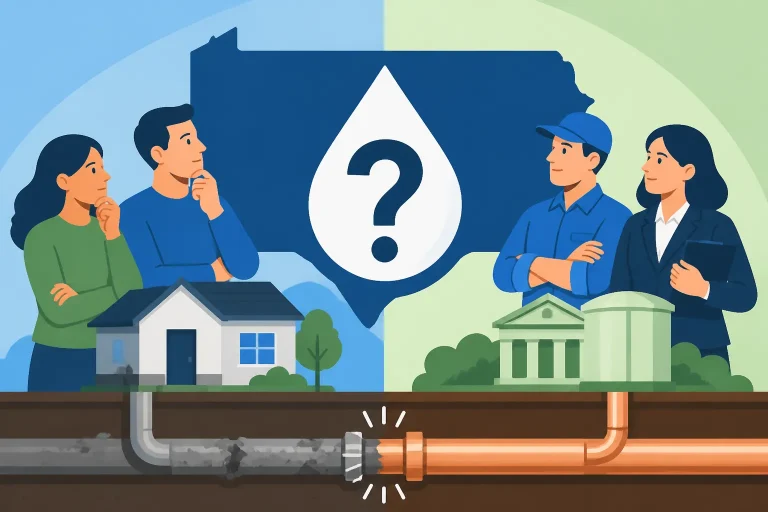
A CCR can be accurate and still not describe the water at every faucet in every home. The U.S. Environmental Protection Agency explicitly distinguishes the CCR’s system-wide water quality information from the quality of water coming out of an individual home’s tap. That distinction is central to using the report well.
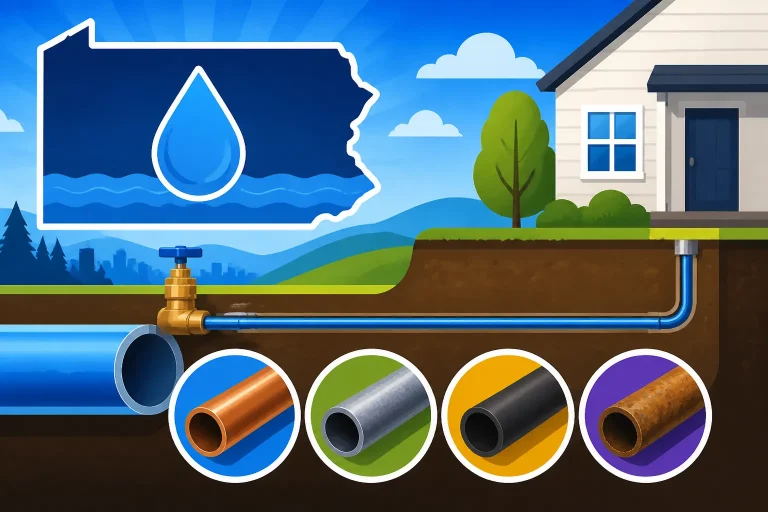
The supplier’s report concerns its system. A home’s water may also be affected by the plumbing between the supplier’s system and the faucet, including pipes, fixtures and other materials inside or connected to the property. A report about the system cannot establish the condition of every household’s plumbing. Nor can a report for a whole service area identify what was in one specific glass of water on a particular day.
That is why “the report meets its stated standards” and “I know what is coming from this faucet” are different conclusions. A system-wide report can provide valuable context, but it cannot by itself answer a question that requires a sample from a particular tap. If your concern is about plumbing or a home-specific result, use a method suited to that question.
A useful distinction is:
| Question | Information that may help | What it does not establish by itself |
|---|---|---|
| What does the supplier report about its system? | The supplier’s CCR and its explanations | The quality of every home’s tap water |
| Which supplier serves an address? | A bill, service-area lookup or Pennsylvania DEP’s Drinking Water Reporting System | The condition of pipes and fixtures inside the property |
| What is in a particular faucet sample? | A suitable sample collected and analyzed for the question | The supplier’s system-wide results |
| Could home plumbing affect the water? | Plumbing history, service-line information and a relevant tap sample | A complete picture from the CCR alone |
If you want to understand the difference between the system’s report and your own faucet, read Does a Pennsylvania Water Quality Report Describe Your Own Tap?. If the concern involves lead, older plumbing or a service line, When a Clean Utility Report Meets Old Plumbing in a Pennsylvania Home explains why the system report may not settle the household question. For possible lead concerns, see The Pennsylvania Lead Service Line Guide for Owners and Renters and How to Request a Lead Test for Your Pennsylvania Home’s Tap Water.
A water test should be matched to the question. A general test, a supplier’s report and a faucet sample are not automatically interchangeable. Before arranging a test, decide what you are trying to learn: whether the report’s result is clear, whether a specific plumbing component could be contributing to a concern, or what is in a sample at a particular tap. The right sampling location and analysis depend on that purpose.
Do not assume that a filter or treatment system is needed just because a report lists a detection. A report entry needs to be understood in context first. If a household is considering treatment, it should compare the system’s certification and design claims with relevant test results rather than treating a CCR as a complete prescription. For a wider discussion of how to decide between a report, a test and a filter, see Should Pennsylvanians Trust Utility Results, Test the Tap or Filter?.
The reverse is also true: a clean-looking CCR does not necessarily answer every home-specific concern. If a household has a reason to investigate its own plumbing or tap, a system report cannot substitute for a relevant evaluation. This does not mean the report is untrustworthy; it means the report and a household test serve different purposes.
What to do when the report raises questions
A useful next step depends on the kind of question. Some questions are about locating or understanding the document. Others concern a system result, a notice, a home’s plumbing or a health issue. Start by identifying which category fits, then contact the appropriate source.
If you cannot find the report, check that you have the correct supplier and address. Use the supplier’s official address or service-area lookup, confirm the system through Pennsylvania DEP’s Drinking Water Reporting System if needed, then visit the supplier’s report page or request the report. If you find a general page but not the report itself, ask for the direct URL. Pennsylvania DEP says suppliers that post reports online must provide a direct URL to their customers.
If the report is available but hard to interpret, gather the relevant details before you call or write:
- The supplier and report period.
- The section or table where the question appears.
- The exact result, including its units.
- The comparison value or standard shown in the report.
- Any footnote or explanation attached to the entry.
- The specific point that remains unclear.
Then ask a focused question. For instance: What does this row mean? Does the report identify a violation? What do the units refer to? Does the result describe the system or a particular sampling point? Does the report describe any response or follow-up? Ask the supplier to explain its own report rather than trying to infer a conclusion from a table alone.
If the supplier’s answer does not resolve a question about the regulatory status of a reported issue, consult the official information available from Pennsylvania DEP. If the question is about what is in your home’s water, ask what kind of sample or test is appropriate for the issue. A supplier’s system report and a household sample may need separate follow-up.
For an address where no one in the household receives the water bill, ask the landlord or property manager for the supplier name and report. If that does not resolve the question, use the supplier’s official service-area information or Pennsylvania DEP’s system to check the service provider. A tenant can still ask which system serves the building and where its report can be found.
If your concern is a household plumbing issue, identify what you know about the building and the plumbing before choosing a test or treatment. A utility report cannot tell you what materials are inside your home. If a lead service line notice or inventory is involved, the report and the service-line information are separate records. See How to Identify Your Water Service Line Material in Pennsylvania and Is Your Address on a Pennsylvania Service Line Inventory Map? for related questions.
If the report itself describes a violation or directs customers to take action, follow the supplier’s instructions and use its official website to find current contact details. Do not rely on an old copy, a search result snippet or an unofficial summary when a current notice is available. If the report points to another notice, read that notice as well; the CCR may summarize a matter without replacing the detailed customer communication.
If the question is whether a reported result creates a health concern for a particular person, ask a medical professional or your local health department. A CCR is not a personal medical assessment. For a question about the status or meaning of the supplier’s result, the supplier or Pennsylvania DEP is the appropriate place to seek clarification.
Keeping notes can make the follow-up more productive. Record which report you read, the row you are asking about and the answer you receive. If you later obtain a home test, keep the report and the laboratory result distinct; one is system-wide information and the other describes a particular sample.
Frequently Asked Questions
Does every Pennsylvania customer receive a Consumer Confidence Report?
Pennsylvania DEP says community water systems must mail or otherwise deliver a copy of a water quality report to each customer. If you did not receive one, ask the supplier for a copy and confirm that it has the correct address for the service.
What if the report is not posted on the supplier’s website?
Ask the supplier directly for the report. Pennsylvania DEP also links reports for selected systems. If the supplier posts a report online, Pennsylvania DEP says it must provide a direct URL to customers.
Does a CCR tell me exactly what is coming from my kitchen tap?
No. The U.S. Environmental Protection Agency distinguishes system-wide water quality information in a CCR from the quality of water coming out of an individual home’s tap. A home-specific concern may need a test or plumbing follow-up suited to that question.
Does seeing a contaminant in the report mean the supplier violated a rule?
Not by itself. Read the reported result, units, comparison information and the report’s own explanation. A detection and a violation are different concepts, and the report should identify how it describes the result.
Who should I contact if I cannot understand a result?
Contact the supplier and ask about the exact table entry, units, comparison value and any notes. For questions about a reported regulatory issue, consult the official information from Pennsylvania DEP. For individual health questions, contact your local health department or a medical professional.
Sources
- Pennsylvania Department of Environmental Protection — Consumer Confidence Reports | Department of Environmental Protection | Commonwealth of Pennsylvania (checked November 13, 2026)
- U.S. Environmental Protection Agency — Report of the Consumer Confidence Report Rule Revision Working Group to the National Drinking Water Advisory Council (checked November 13, 2026)
Disclaimer
This article is for general informational purposes only and does not constitute professional advice. Laws, prices and regulations vary by location and change over time. Consult a qualified professional for guidance on your specific situation. Pennsylvania Water Guide is not a government agency or water utility and is not affiliated with any public water system.