Where to Find Bucks County Tap Water and Well Testing Guidance
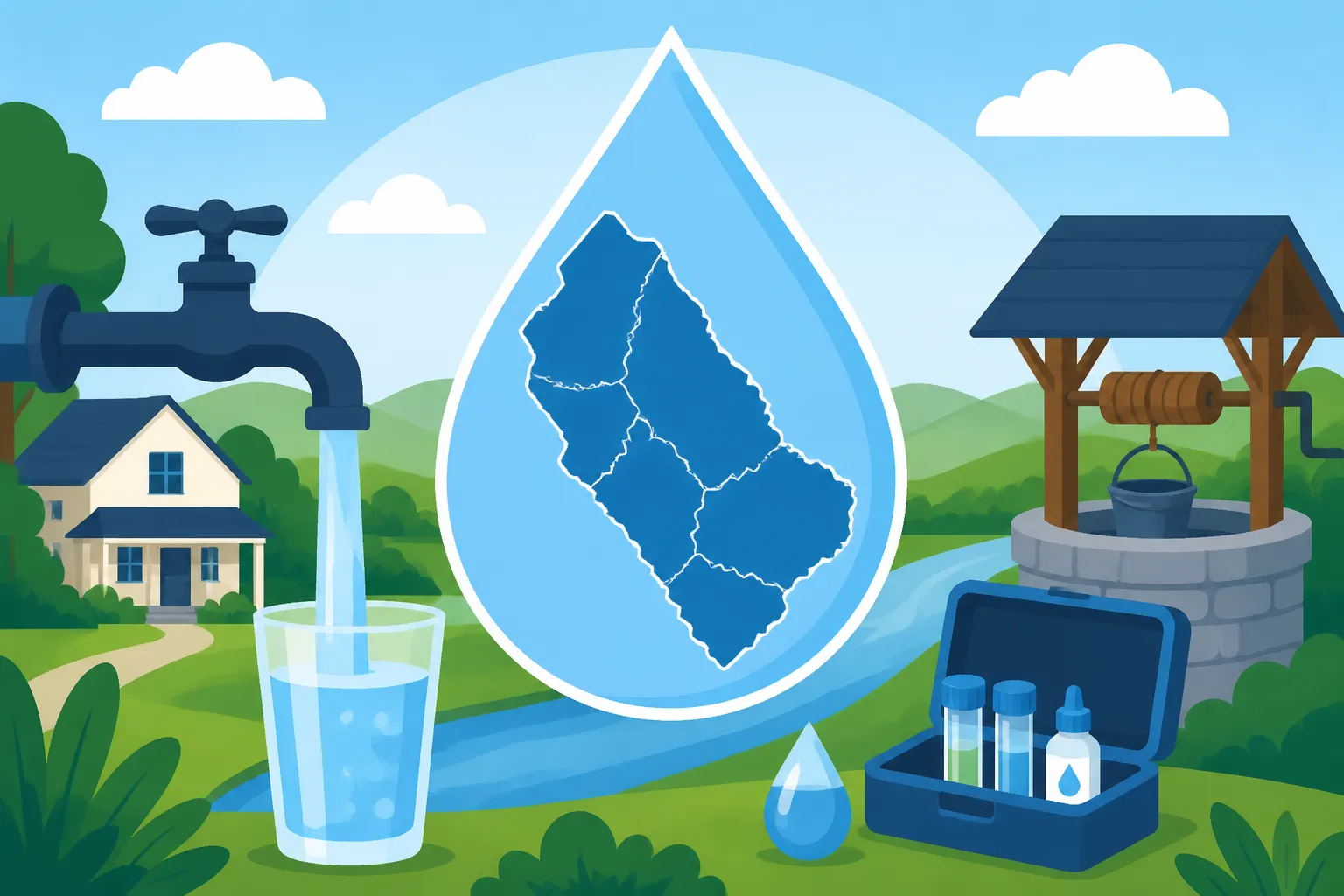
Bucks County residents looking for a tap water test can run into a basic but important distinction: a public water supply and a private well call for different sources of information. The Bucks County Department of Health offers residential water-testing resources, while public water customers should start with their supplier’s records. Here’s how to choose the right route and make sense of the next steps.
Start by identifying your water source
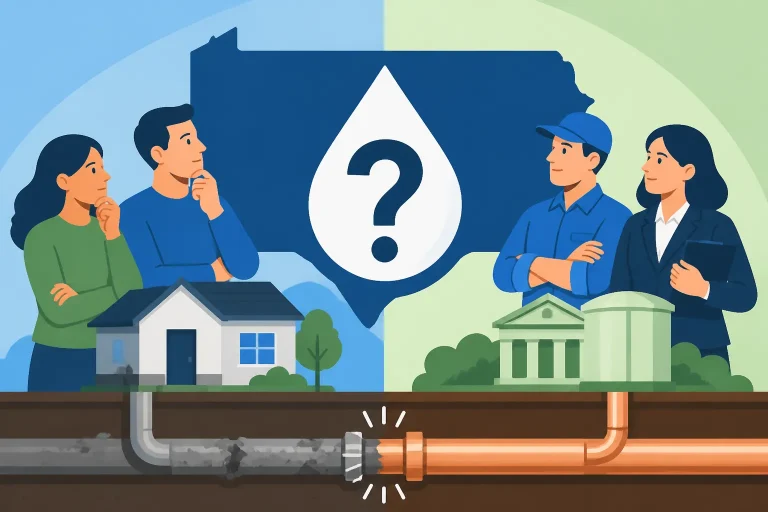
Before choosing a test, find out who supplies water to your home. In Bucks County, a home may receive water from a public water system or rely on a private well. The testing guidance that applies depends on which one serves your tap.
If you are unsure, check a recent water bill, ask your landlord or property manager, or contact the organization responsible for water service at your address. A bill may name the supplier, but a rental arrangement or shared building setup can make the answer less obvious. If the supplier is not clear, ask the property owner or the utility before ordering a test.
This distinction matters because a public supplier’s water quality report describes information about the public system, while a sample collected at home can reflect water after it has passed through household plumbing. A private well, meanwhile, is not part of a public utility’s testing and reporting program. A public water report therefore cannot tell a private well owner what is in the well water.
| Your water source | Where to start | What that route can help you understand |
|---|---|---|
| Public water system | Identify the supplier and review its water quality report | System-level water quality information and reported results |
| Private well or spring | Use Bucks County Department of Health residential testing resources | Residential testing options, accredited drinking-water labs, and well or spring disinfection information |
| Unknown or shared service | Ask the landlord, property manager, or water provider who supplies the property | Whether public-system records or private-well testing guidance is the right fit |
For a public supply, How to Find the Water Quality Report for Your Pennsylvania Address can help you locate the right report. For a private well, start with the Bucks County Department of Health’s residential resources rather than assuming a nearby utility report covers your water.
Keep the scope of each source in mind. A supplier report is useful for understanding the system, but it is not automatically a test of water collected from your own kitchen faucet. A private-well test, in turn, says something about the sample collected at the home and does not describe a nearby public water supply. Does a Pennsylvania Water Quality Report Describe Your Own Tap? explains why those results and a home sample are not interchangeable.
What Bucks County’s residential testing resources cover
The Bucks County Department of Health provides residential water-testing information, including test kits and a list of accredited drinking-water labs. Its resources also cover disinfection of home wells and springs. That makes the county’s residential information a useful starting point for a household deciding how to test a private water source or where to look for related guidance.
The scope is important: the county page describes residential testing, not a general testing service for tap water from public water systems. If your home receives public water, do not assume the residential well-testing information is a county-run service for testing any customer’s municipal tap. First identify the public supplier and review its records. If you want a sample from your own faucet, ask the supplier whether it offers a sampling option or can explain what type of independent lab service to consider.
The county’s page also gives practical information about test-kit availability. The Bucks County Department of Health states: Water test kits can be purchased from 8am – 4:30pm Monday – Friday. Check the department’s official website for current details before making a trip or relying on a particular collection option.
For a residential well or spring, look at the county information as a starting point, then check the details for the test you need. A kit and an accredited laboratory are not the same thing as a finished interpretation: you still need to understand what the test measures, how the sample must be collected, and what to do if a result needs follow-up. Home Water Testing in Pennsylvania: Kits, Labs and Your Results covers how those pieces fit together.
The county also provides information about disinfection of home wells and springs. Treat that as a separate topic from routine testing. Disinfection guidance concerns a response or maintenance step; it does not replace testing to find out what is present in a sample, and a test result should not be treated as proof that a well was disinfected properly. For a specific result or situation, use the county’s official resources and consult an appropriate professional.
What the county resource does not answer by itself
A residential testing page cannot establish the quality of every home’s water. Results depend on the source and the sample collected, and a test is useful only for the substances it measures. A general page can help you locate testing options, but it does not tell you which exact panel is right for every well, household, or concern.
The page also does not replace a public water supplier’s consumer information. If you are on public water and want to understand system-wide monitoring, reported results, or a notice from the supplier, use that supplier’s official information. The article How Pennsylvania Tap Water Quality Is Tested and Reported provides context for how public-system testing and reporting differ from sampling one home.
If your home is on public water
For public water customers, begin with the water supplier rather than ordering a private-well test kit. Find the supplier’s current water quality report and check that it covers the system serving your address. A county or neighboring community report may be about a different supplier, even if the locations are close to one another.
A report can help you understand what the supplier monitors and reports for its system. It may also explain where the water comes from and whether reported results meet applicable requirements. But it does not necessarily describe the water after it has traveled through your building’s plumbing and reached your faucet. If you are concerned about a particular tap, especially because of plumbing or a local issue, the question may call for a sample collected at that tap rather than relying only on system-wide results.
A useful sequence is:
- Confirm the supplier. Check a bill or ask the property owner, building manager, or utility.
- Find the supplier’s report. Use the utility’s official website or ask where its current report is posted.
- Check the report’s scope. Make sure it relates to the supplier serving the address and note the source and sampling information it provides.
- Ask about a home sample if needed. Contact the supplier to ask whether it offers a customer tap test or can explain where to find appropriate testing options.
- Choose a test that fits the question. A system report and a sample from a particular faucet answer different questions.
Avoid treating a result from another address or a different water system as a substitute for information about your own supply. If your concern is a taste, odor, or color change, describe what you notice when you contact the supplier and ask whether it has guidance for your location. A change in appearance or taste does not by itself identify the cause. Taste, Smell and Color Problems in Pennsylvania Tap Water explains why those clues can have different explanations.
If you decide to order an independent home test, first check whether the testing provider accepts samples from public water customers and whether it offers analysis for the issue you are investigating. Do not assume that a residential well kit is suitable for a public tap or that a broad screening panel covers every question. The lab’s sample instructions and the exact test scope matter.
A public-system report and an independent faucet sample can complement one another, but one does not automatically replace the other. The supplier report is a source of system-level information; a home sample is specific to the location and conditions at the time it was collected. Should Pennsylvanians Trust Utility Results, Test the Tap or Filter? offers a framework for deciding which information is most relevant to a particular concern.
If your home is on a private well or spring
Private well owners need a different starting point. The Bucks County Department of Health’s residential water-testing information is relevant because it addresses home testing, test kits, accredited drinking-water labs, and disinfection of home wells and springs. Use those county resources to identify available options, then make sure the test you choose matches your reason for testing.
A useful first step is to write down what you want the test to answer. Are you looking for a general picture of the water, following up on a previous result, or responding to a specific change in the water or conditions around the property? A test panel should be chosen for the question; no single result automatically describes every possible water-quality issue.
Before choosing a kit or lab, confirm:
- Which substances or measures are included in the test.
- Whether the laboratory is accredited for the specific drinking-water tests you need.
- Whether the sample must be collected in a particular container or under particular conditions.
- Whether the lab provides collection instructions, or offers another collection arrangement.
- How results are delivered and what information accompanies them.
- Whether the lab or a qualified professional can explain what a result does and does not establish.
The Bucks County Department of Health provides a list of accredited drinking-water labs, which can help you compare options. Accreditation is relevant to the lab’s testing work, but it does not mean every lab performs every test. Check that the lab is accredited for the specific analysis you want, not simply that it appears on a list. Pennsylvania’s Accredited Water Testing Labs and How the System Works gives more context on how to evaluate a lab listing.
A commercial service may also be one option to compare. For example, if considering Tap Score, check the exact test scope, lab credentials, sample instructions, and whether the service is designed for a private well or a public-water tap. Its presence as an option does not make it a Bucks County Department of Health recommendation, and a brand name alone does not tell you whether a particular test fits your question.
Collecting a useful sample
Follow the selected lab’s instructions closely. Different tests can have different collection requirements, so a method that works for one sample may not be appropriate for another. Use the container supplied or specified by the lab, and avoid changing the collection procedure without asking the lab first.
Pay attention to details such as which faucet to use, whether the lab asks for a sample before or after treatment equipment, and how the sample should be handled before it reaches the lab. If you have a filter, softener, or other treatment system, tell the lab or professional when asking where to collect. A sample from before a treatment device and one from after it answer different questions.
Keep a record of the sample location, collection date, treatment equipment in use, and any instructions followed. That information can help when you compare results later or ask someone to interpret an unexpected finding. If the collection steps are unclear, contact the lab before collecting rather than guessing.
For a broader view of planning a well test, see Where Pennsylvania Well Owners Can Send a Water Sample and Core Tests and Add-Ons: A Checklist for Pennsylvania Well Water. The right test depends on the household’s circumstances and the question at hand; a neighbor’s panel or a generic kit should not be assumed to fit your well.
Reading results and choosing a next step
When a result arrives, start by checking the basics: the sample location, test name, units, reporting information, and any reference values shown by the lab. Confirm that the result is for the test you requested and that the sample was collected from the intended location. If something appears unclear or inconsistent, ask the lab to clarify before drawing a conclusion.
Do not treat a laboratory result as a diagnosis or as a complete account of water quality. It describes the sample submitted and the substances the lab tested for. A result that does not report a substance is not necessarily evidence that it was absent; the substance may not have been included in the panel. A result from a treated-water tap also cannot automatically describe untreated water elsewhere in the plumbing or system.
If a result is outside a reference value or otherwise raises concern, ask the laboratory what the result means within the scope of that particular test. For health questions, contact the local health department or a medical professional. If you are considering treatment equipment, get the result interpreted before buying a system and confirm that any equipment’s certification matches the specific substance and test result. Treatment products are designed for particular uses and should not be assumed to address every possible water issue.
For a private well, an unusual result may call for follow-up testing or advice from a qualified water professional. For public water, contact the supplier if the issue may involve the public system, and ask what information or testing is appropriate for your specific address. Keep a copy of the report and any follow-up explanation so that later decisions are based on the actual result rather than memory or a product claim.
The county’s residential resources can help you locate testing information, but the decision path still depends on the water source. Public water customers should work from the supplier’s records and ask about tap-specific concerns. Well owners should use residential testing resources, select an appropriately accredited lab for the test, and follow the lab’s collection instructions. For more detail on making sense of a report, see How to Read a Pennsylvania Water Test Report, Line by Line.
Frequently Asked Questions
Does Bucks County offer testing for every public-water tap?
The Bucks County Department of Health’s residential water-testing page describes residential testing, not a general testing service for tap water from public water systems. Public water customers should identify their supplier and ask about its records or available tap-sampling guidance.
Where can Bucks County residents find private-well testing information?
The Bucks County Department of Health provides residential water-testing information, including test kits and a list of accredited drinking-water labs. Its resources also cover disinfection of home wells and springs. Use the department’s official website for current details.
Does a water quality report tell me exactly what is in my kitchen tap?
A public supplier’s report provides information about its water system; it is not automatically a test of water collected from a particular faucet. Household plumbing and the sample location can matter, so ask the supplier or a qualified lab which test fits your question.
Can I choose a test kit before deciding what I need to know?
It is better to identify the question first. Compare the test scope, lab credentials, and collection instructions, and confirm that the kit is intended for your water source. A kit that does not include the analysis you need cannot answer that question.
Disclaimer
This article is for general informational purposes only and does not constitute professional advice. Laws, prices and regulations vary by location and change over time. Consult a qualified professional for guidance on your specific situation. Pennsylvania Water Guide is not a government agency or water utility and is not affiliated with any public water system.