Does a Pennsylvania Water Quality Report Describe Your Own Tap?
A Pennsylvania water quality report can look reassuring—or alarming—without telling you exactly what is coming out of your kitchen faucet. The key is understanding what the report measures, what it cannot say about your home’s plumbing, and when a tap sample may answer a question the report cannot.
What a Pennsylvania water quality report actually describes
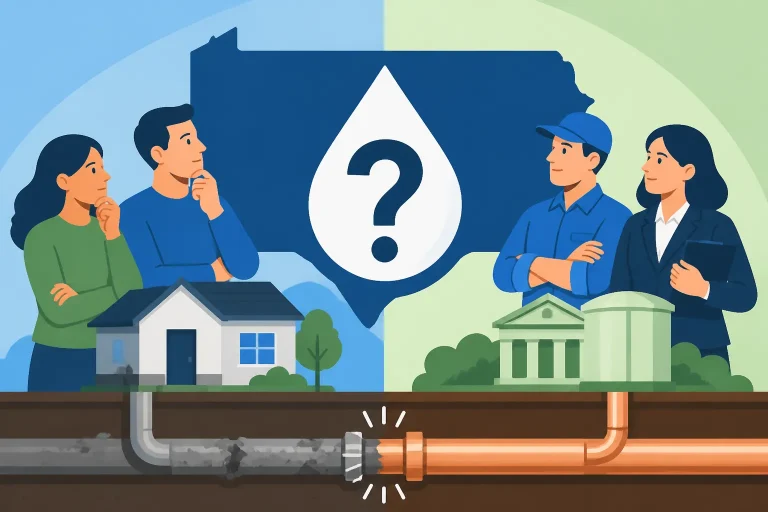
A water quality report is useful for understanding the public water system that serves an address. It is not a report on a sample collected from every customer’s kitchen faucet. According to the U.S. Environmental Protection Agency, a CCR provides system-wide water quality information, distinct from the quality of water coming out of an individual home’s tap.
That distinction matters because water passes through more than the treatment process. It travels through the supplier’s distribution system and then through the service line and plumbing connected to a particular property. The report can help you understand the water system’s results, but it does not account for every pipe, fixture, or condition between the system and your glass.
A report is best treated as information about the shared supply—not as a personal test result. It can help you identify what the supplier reports, what was monitored, and whether the report describes a result or an issue that needs further attention. But it cannot establish the exact quality of water at your faucet.
That does not make the report irrelevant. It is a starting point for understanding your supplier and deciding what question, if any, you still need answered. For example, a report may help explain which substances the supplier monitors or how it characterizes its water. It may also alert you to a reported concern that deserves a closer look. To make sense of the document, see How to Read Units, Limits and Violations on a Pennsylvania CCR and How Pennsylvania Tap Water Quality Is Tested and Reported.
It is also important not to read “system-wide” as meaning that every customer receives identical water under every condition. A shared system’s results do not describe each individual home’s plumbing, and different points in a distribution network or building can have different conditions. The report’s conclusions apply to the system information it presents. They should not be stretched into a claim about every tap.
The reverse mistake is just as common: assuming that a report’s limits mean the system is unsafe. A report that does not answer a personal tap question is not, by itself, evidence that your water has a problem. It means the report and a household-specific test answer different questions.
A useful way to frame it is:
| Question | What a water quality report can help answer | What it cannot establish by itself |
|---|---|---|
| What does the supplier report about its water? | The report summarizes information for the public water system it covers. | The exact result for water at a particular faucet. |
| Does the report describe my home’s pipes and fixtures? | It may help you understand the water supplied to the area. | Whether a service line, fixture, or indoor plumbing changes water at your tap. |
| Should I test my tap? | The report may help identify issues or questions to follow up on. | Whether a household sample is necessary for your specific concern. |
| Does a reassuring report settle every question? | It can provide useful system-level context. | It cannot replace a test designed to answer a question about your own tap. |
The report and a home test are not competing sources of information. They look at different parts of the path from water supplier to faucet. A report can describe the public system; a properly planned household sample can investigate the water at a selected tap.
Why your tap may differ from the system information
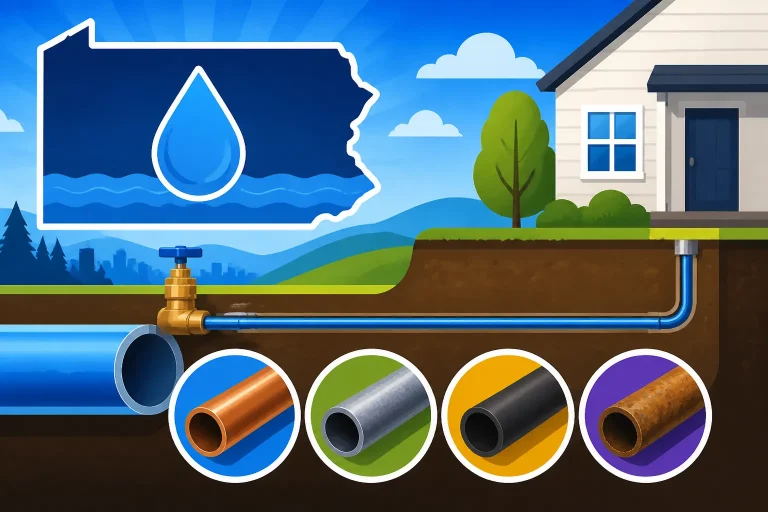
Once treated water enters a property, it encounters that property’s service line and plumbing. The materials and condition of those parts can affect what a sample collected at a faucet shows. So can the location of the faucet, how it is used, and how water has been sitting in the plumbing. A system-wide report is not designed to inspect those household-specific conditions.
This is why two nearby homes can have different tap-water questions even when they receive water from the same supplier. Their plumbing may not be the same, and their household samples may not be collected from the same place or under the same conditions. A result from one home should not automatically be treated as the result for another.
The water supplier’s information can still help put a household concern in context. But context is not a substitute for a test when the question is specifically about a tap. If you are concerned about older plumbing, start by identifying the materials you can check and asking what is known about the service line. How Home Plumbing Changes What Comes Out of a Pennsylvania Tap explains why the route through a home matters, while How to Identify Your Water Service Line Material in Pennsylvania focuses on identifying that part of the connection.
A service-line record, map, or notice may also be useful background, but it is not the same as a water sample. A line’s listed material does not tell you what a laboratory would find in a glass of water from a particular faucet. Likewise, a sample result does not necessarily identify every source along the route. These are separate pieces of evidence that can inform one another.
Household fixtures matter, too. A kitchen faucet, a bathroom tap, and a refrigerator dispenser do not necessarily represent the same sampling point. A filter or other treatment device can also change what comes out of the outlet where it is installed. If a test is meant to assess the water you actually drink, choose the sample point and collection method to match that question. Do not assume that a result from an untreated tap describes water after a filter, or that filtered water represents every tap in the home.
Water can also look, taste, or smell different without that observation answering a health or laboratory question. A change in appearance or flavor is worth investigating, but sensory clues alone cannot confirm what is present or absent. The article Taste, Smell and Color Problems in Pennsylvania Tap Water can help you think through possible causes without treating appearance as a substitute for testing.
The practical takeaway is that the report and the tap are different points of reference. The supplier’s report provides information about a public system. Your own plumbing and the sample location determine whether a household test is needed to answer a more specific question. Neither type of information should be asked to do the job of the other.
How to use the report without overreading it
Start by confirming that you have the report for the supplier serving your address. In Pennsylvania, the supplier name may not be obvious from a mailing address or neighborhood name. If you are unsure which system serves the property, use the official utility’s information to verify it. How to Find the Water Quality Report for Your Pennsylvania Address explains how to track down the relevant report.
Then read the report for what it says, not what you hope it will prove. Pay attention to the system or service area covered, the monitoring information presented, and any explanations of results or notices. If a term, unit, or comparison is unfamiliar, pause before deciding that a result is either harmless or alarming. How to Read Units, Limits and Violations on a Pennsylvania CCR can help clarify how those entries work.
As you read, separate three questions:
- What does the report say about the public water system? Record the result or concern as the report presents it.
- Does that information relate to the issue you are trying to understand? A system result may provide useful context, but it may not address a concern tied to a particular tap or plumbing component.
- What would answer the remaining question? Depending on the concern, that could mean asking the supplier for clarification, checking plumbing information, or arranging a household sample.
Avoid taking a single reassuring phrase as proof that every faucet has been tested. A system report summarizes the information it covers; it is not a personal inspection of your home. Similarly, do not treat a result or notice as proof that every home has the same condition. The report is a reason to understand the details, not to assume that the same conclusion applies identically to each property.
If the report describes a water-quality concern, read the accompanying explanation and any instructions provided by the supplier. Use the official utility or agency website to find current contact details if you need clarification. A household filter, bottled water, or a separate test should not be chosen solely from a vague impression of a report. First establish what the reported concern is and whether it matches the question you have about your own water.
The report may also help you decide whether a household test is relevant. For instance, if your concern relates to materials inside your home, the public-system report alone is unlikely to settle it. If your concern relates to a reported system issue, the supplier’s notices and follow-up information may be more directly useful than ordering an unrelated home test. Good decisions begin with matching the evidence to the question.
One other distinction is worth keeping in mind: finding a report is not the same as finding a result for your address. A report may cover a larger service area or a group of customers. If you live in an apartment, a rental, or a property with a master meter, you may need to identify who supplies water to the building and what part of the service the report covers. Master-Metered Apartment in Pennsylvania? Finding Your Water Supplier and How Pennsylvania Renters Can Get the Water Report a Landlord Receives may help with those situations.
When a tap test can answer a different question
If you need to know what is in water at a particular faucet, a sample collected from that tap is more directly suited to the question than a system-wide report. That does not mean every household needs to test, or that any test kit will give a reliable answer. The useful test depends on the substance of concern, the sample point, and the collection procedure.
Before ordering a test, define the question as specifically as you can. Are you trying to understand a possible issue related to a service line, indoor plumbing, a taste or odor change, or a contaminant mentioned in the report? Different questions can call for different tests and sample conditions. A broad test that does not include the substance you are concerned about may leave the main question unanswered.
Check with the laboratory about what it tests, what sample containers or collection steps are required, and whether the test is appropriate for your concern. Follow the lab’s instructions closely. Collection details matter: a sample collected after water has been sitting in plumbing may answer a different question from one collected after flushing. The lab or an appropriate qualified professional can help determine which approach fits the question.
A test result is only as useful as its scope and collection method. Keep a copy of the laboratory report and note where and how the sample was collected, whether treatment was in use, and any relevant household conditions. Those details can help you compare results later and explain the context to the lab or a qualified professional.
If the concern involves a specific material or contaminant, do not assume that a general home test covers it. Ask the laboratory to confirm that the exact substance is included and that its method is suitable for the sample. If a concern relates to an issue in the public system, ask the supplier what its report or notices cover before treating a household test as a replacement for that information.
A tap test also has limits. It describes the sample collected at the location and time represented by that sample; it does not automatically characterize every faucet or every condition in the home. If you want to assess water after a treatment device, collect or arrange the sample in a way that reflects that use. If you want to understand the incoming supply before household plumbing, ask a qualified sampler or laboratory what sampling location and method are appropriate.
When comparing results, avoid comparing unlike samples as if they were interchangeable. A supplier’s system-wide result and a household tap sample may have different collection points and purposes. A test before a filter and a test after a filter also address different questions. If results seem inconsistent, check the sampling instructions and contact the laboratory or supplier for help interpreting what was measured. For more on weighing system information against household testing, see Should Pennsylvanians Trust Utility Results, Test the Tap or Filter?.
If the test indicates a concern, the next step depends on what was tested and the result. Ask the laboratory what the result means within the scope of its test, and contact the relevant utility or qualified professional when the issue involves the public supply, plumbing, or treatment. For questions about possible health effects, ask your local health department or a medical professional rather than relying on a report or product claim alone.
A practical way to decide what to do next
Use the report as the first layer of information, then add evidence only where it answers a real remaining question. This approach helps avoid both false reassurance and unnecessary testing or treatment.
- Confirm the supplier. Make sure the report covers the water supplier serving your property. If you are not sure, verify through official utility information.
- Read the report’s scope. Identify what system information it presents and what it does not claim to measure at an individual home.
- Name your concern. Be precise: a question about supplier results is different from a question about a particular faucet, service line, fixture, or treatment device.
- Choose the right next step. Ask the supplier about system information, check plumbing details when the concern is household-specific, or speak with a laboratory about a tap sample that fits the question.
- Keep the evidence together. Save the report, any relevant notices, service-line information, lab instructions, and test results so they can be considered in context.
This process does not require treating every report as a warning or every home test as definitive. It is a way to avoid drawing conclusions beyond what the evidence supports. A report can be valuable even when it does not describe your individual tap. A tap test can be valuable even when the supplier’s report is reassuring. They serve different purposes, and a thoughtful decision uses the evidence that matches the question.
If a filter is being considered, first identify the substance you want to reduce and confirm that the specific model is certified for that reduction. Then compare the certification with the result you are trying to address and follow the manufacturer’s maintenance instructions. A filter chosen for taste may not be designed for a different concern, and no product should be assumed to resolve every issue. A test can help make that choice more specific; it cannot make a claim about treatment performance without the right certification and upkeep.
For renters, the distinction between a building’s water arrangement and a public supplier’s report can add another step. Ask the landlord or property manager which supplier serves the building and whether any building-level plumbing or treatment affects the water at your unit. If you need a tap test, clarify who can arrange sampling and whether the chosen faucet reflects your concern. A utility report alone may not explain conditions inside a building.
For homeowners, the same logic applies to a property with older or uncertain plumbing. A system report can provide useful context, while plumbing records or a tap sample may be needed to investigate a home-specific question. If you are buying a property, do not assume that a report for the area serves as a water test for the house. Ask what has actually been sampled, where it was collected, and what the result covers.
The bottom line is simple: a Pennsylvania water quality report can describe the public system, but it does not necessarily describe water at your individual tap. Read it as system-level evidence, then use a targeted question, appropriate sampling, or professional guidance to fill the gaps that matter to your home.
Frequently Asked Questions
Does a reassuring report prove my tap water has no issue?
No. A report gives system-wide context; it does not test every home’s plumbing or faucet. It can be reassuring about the information it covers without answering every household-specific question.
Does a report that mentions a concern mean my home has the same result?
Not necessarily. The report describes the system information it presents. A test from your own tap may be needed to investigate a question about a particular home or faucet.
Should I test my tap if the report looks clear?
Not automatically. First identify the concern you want to investigate. If it relates to a specific tap, plumbing component, or treatment device, ask a laboratory what sample and test would answer that question.
Can a filter make a system report apply to my home?
No. A filter does not change what the supplier’s report describes. It may affect water at the outlet where it is installed, but any treatment claim should be checked against the device’s certification and your test results.
Sources
- U.S. Environmental Protection Agency — Report of the Consumer Confidence Report Rule Revision Working Group to the National Drinking Water Advisory Council (checked November 13, 2026)
Disclaimer
This article is for general informational purposes only and does not constitute professional advice. Laws, prices and regulations vary by location and change over time. Consult a qualified professional for guidance on your specific situation. Pennsylvania Water Guide is not a government agency or water utility and is not affiliated with any public water system.